
NATIONAL
Washington’s Budget Standoff Hits Home: What the 2026 Federal Shutdown Means for New Hampshire
The federal government entered a partial shutdown on January 31 after Congress missed its budget deadline — and New Hampshire families, federal workers, and airports are already feeling the impact.

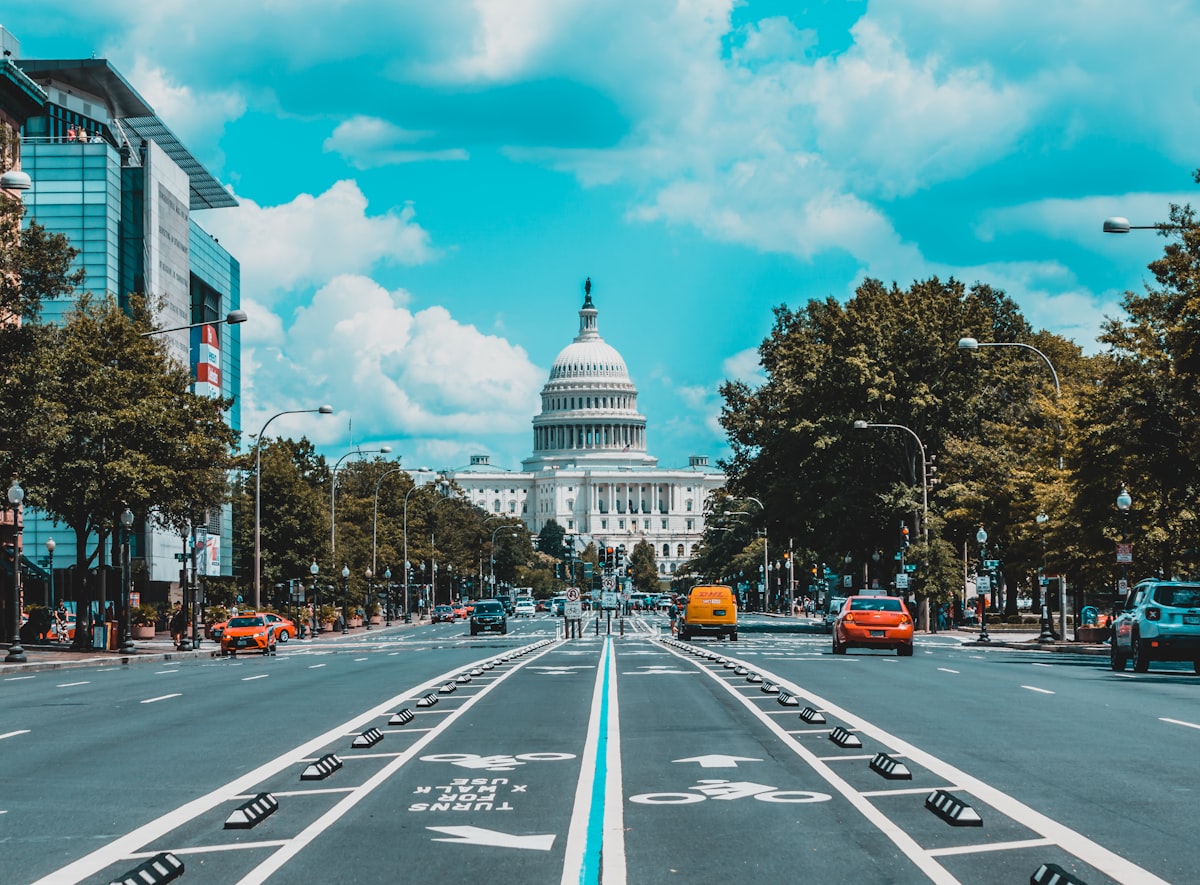
WASHINGTON / CONCORD, N.H. — The federal government entered a partial shutdown at midnight on January 31, 2026, after Congress failed to meet its funding deadline — and the ripple effects are reaching every corner of the country, including New Hampshire.
The four-day shutdown, which ended on February 3 when the House finally passed a continuing resolution, was triggered by a standoff over immigration enforcement funding and demands from Senate Democrats for reforms to how federal agents operate following a deadly incident involving Customs and Border Protection agents in Minneapolis. It came just months after the longest government shutdown in modern U.S. history ended in November 2025, leaving federal workers and agencies still recovering from that earlier six-week disruption.
What Shut Down — and What Didn’t
The shutdown affected roughly half of all federal departments. Among the most visible impacts: approximately 10,000 Federal Aviation Administration workers were furloughed, while air traffic controllers — deemed essential — were required to continue working without pay. For travelers at Manchester-Boston Regional Airport and those flying through Logan, the uncertainty added stress to an already difficult winter travel season.
Essential services including Medicare, Medicaid, and Social Security payments continued without interruption. National parks remained open, as they had been fully funded through September 30. Passport and visa services at the State Department also continued, though non-emergency consular services were suspended.
For New Hampshire residents who work for federal agencies or rely on federal contractors, the shutdown represented another period of financial uncertainty — a recurring anxiety that has become a defining feature of working for the federal government in recent years.
The DHS Shutdown Continues
Even after the broader four-day shutdown ended on February 3, a second, narrower shutdown began on February 14 — this one targeting only the Department of Homeland Security. The DHS partial shutdown, which is still ongoing as of this writing, has suspended Global Entry enrollment, affecting New Hampshire frequent travelers who rely on the trusted traveler program to speed through customs.
The political standoff underlying the DHS shutdown is rooted in the same immigration enforcement dispute that triggered the January shutdown. Democrats have demanded reforms to how CBP and ICE agents operate; Republicans have refused to attach those conditions to funding. Both sides have blocked each other’s proposals in the Senate, leaving DHS without discretionary funding indefinitely.
New Hampshire’s Congressional Delegation Responds
New Hampshire’s two Democratic House members, Reps. Chris Pappas and Maggie Goodlander, voted against the spending package that ultimately ended the January shutdown, citing the expiration of enhanced health care subsidies under the Affordable Care Act that the deal failed to extend. Both lawmakers said the deal left too many Granite Staters behind.
Senator Jeanne Shaheen, who helped negotiate the deal that ended the January shutdown, was among seven Democrats who voted in favor of the agreement — a sign of the difficult tradeoffs facing the state’s delegation as they balance national negotiations with the needs of constituents at home.
What Comes Next
For Granite Staters, the recurring shutdowns represent more than a political drama in Washington. They translate into real uncertainty for federal employees, contractors, and anyone who relies on federal programs and services. As Congress continues to struggle with the DHS funding standoff, Pine & Cardinal will continue tracking what it means for New Hampshire families.
NATIONAL
Roy Cooper Says Court Ruling Could Boost Whatley
Decision could turn party money into a central issue in North Carolina Senate race


Former North Carolina Gov. Roy Cooper is warning that a major Supreme Court campaign finance ruling could give Republican Michael Whatley a new path to close Democrats’ money advantage in one of the nation’s most closely watched Senate races.
Cooper said the decision could affect his race “more than others” and called it the “worst campaign finance decision since Citizens United,” The Hill reported. Cooper is running against Whatley, a former Republican National Committee chairman, for the open seat being vacated by Republican Sen. Thom Tillis.
The ruling in National Republican Senatorial Committee v. Federal Election Commission struck down federal limits on how much political parties may spend in coordination with candidates. Before the decision, national party committees faced state-based caps for Senate races. The court’s majority held the limits violated the First Amendment, while Justice Elena Kagan warned in dissent that the ruling could turn parties into an “alternative checking account” for campaigns.
The decision could matter quickly in North Carolina. WRAL reported Cooper’s campaign raised $13.8 million during the first quarter of 2026, compared with $5 million for Whatley. Including victory committees, Cooper had raised at least $36 million while Whatley had raised at least $16 million.
That candidate-level gap may now be easier for Republicans to offset. Reuters reported Democratic candidates had a $16 million cash advantage in North Carolina, but the Republican National Committee had a major national cash advantage over the Democratic National Committee as the new rules took effect.
The Associated Press reported Cooper and Whatley won their party nominations in March, setting up a fall race that could help determine control of the U.S. Senate. The ruling makes party money, not just candidate fundraising, a central issue in the final stretch.
BREAKING NEWS
NRSC Hits Democrat ‘Pro-Crime Agenda’ in Police Week Attack Ads
The NRSC rolled out new Police Week ads accusing Democrat Senate candidates of backing a “pro‑crime agenda,” intensifying partisan clashes over law enforcement and immigration enforcement.


FIRST ON THE DAILY SIGNAL—Amid Police Week, the National Republican Senatorial Committee is targeting Democrat Senate candidates with a series of ads accusing them of being anti-law enforcement.
The NRSC has produced eight new ads targeting Democrat Senate candidates in battleground states: former Gov. Roy Cooper of North Carolina, Graham Platner of Maine, Sen. Jon Ossoff of Georgia, former Rep. Mary Peltola of Alaska, Rep. Chris Pappas of New Hampshire, and former Ohio Sen. Sherrod Brown.
The campaign committee is also targeting three Democrat candidates in Michigan’s Senate primary: Rep. Haley Stevens, state Sen. Mallory McMorrow, and former health official Abdul El-Sayed.
Additionally, one of the ads takes aim at two Iowa Democrat candidates: state Sen. Zach Wahls and state Rep. Josh Turek.
“As Democrats prioritize dangerous illegal immigrants and threaten to abolish law enforcement agencies, Republicans are working to keep criminals behind bars and make communities safe again,” NRSC National Press Secretary Bernadette Breslin told The Daily Signal.
“Democrats’ soft-on-crime policies are too dangerous for American families,” Breslin added.
In one such ad, a narrator highlights the administration’s work on crime before criticizing Cooper on issues of law enforcement.
“Thanks to Republicans, violent crime is at all-time lows, and American communities are safer,” the narrator begins.
“But Roy Cooper wants to turn back the clock and bring back Joe Biden and Chuck Schumer’s pro-crime agenda that vilifies law enforcement, denies them crucial resources, and prioritizes dangerous illegal immigrants,” the narrator adds. “Americans can’t afford another Democrat crime wave. Reject Roy Cooper and stop the anti-police agenda.”
The ad features news clips highlighting recent drops in violent crime and Senate Democrats’ opposition to renewing Department of Homeland Security funding.
The ads come as Republicans in the Senate are moving to provide funding to immigration enforcement agencies through a party-line budget bill after a monthslong shutdown of DHS. Democrats objected to providing funding to immigration enforcement agencies during the record-setting shutdown.
The Daily Signal reached out for comment from the candidates mentioned in the ads.
“While Roy spent his career putting rapists and violent criminals behind bars and securing raises for law enforcement and public safety officials, Michael Whatley spent his appointing a convicted child sex predator who served time in prison for multiple counts of felony child sex crimes to a powerful position within the North Carolina Republican Party,” a Cooper campaign spokesperson replied, referring to the Republican candidate for Senate in North Carolina.
The spokesperson was speaking of Harvey L. West Jr., a convicted sex offender who held positions in the North Carolina Republican Party at the same time as Whatley was its chairman.
In response to the Cooper campaign, Whatley told The Daily Signal in a statement, “Nineteen innocent North Carolinians are dead because Roy Cooper chose to let violent criminals walk free—including the brutal murderer of Iryna Zarutska. He won’t answer to the families. He won’t explain the releases. He didn’t even follow the law to notify victims.”
Whatley added, “This was a deliberate, reckless choice that prioritized violent criminals ahead of innocent North Carolinians. Roy Cooper failed at his most basic duty as governor, protecting the people of North Carolina, and families paid the price.”
A Peltola spokesperson also responded to The Daily Signal, rejecting the ad’s premise.
“This ad from D.C. political operatives is a lie—Mary has always stood up to her own party to crack down on violent crime and secure the southern border, and that’s what she’ll continue to do when she gets to the U.S. Senate,” the spokesperson said in a statement.
The spokesperson added, “Mary also called out Joe Biden for his failures at the southern border, and she voted for tougher enforcement and billions in funding for Border Patrol. In the Senate, Mary will work with anyone, including President [Donald] Trump, to bring down crime, secure the border, and keep Alaska safe.”
The post Senate Democrat Candidates Hit With ‘Pro-Crime’ Attack Ads first appeared on The Daily Signal.
BREAKING NEWS
Harris Sounds Alarm, Feds Launch Title IX Probe Into North Carolina Schools
The Department of Education has launched a Title IX investigation into Cabarrus County Schools after reports that female students were required to share intimate facilities with male students.

FIRST ON THE DAILY SIGNAL—The Department of Education has launched an investigation into a North Carolina public school district as officials continue to allow biological men in women’s restrooms, violating presidential executive orders and Title IX.
Rep. Mark Harris, R-N.C., called the violations “deeply disturbing” and thanked the secretary of the department for “quick action.”
June is the second annual Title IX Month, which honors the 54th anniversary of the educational amendments of 1972. On this anniversary day, the department’s Office for Civil Rights announced its investigation into Cabarrus County Schools, following Harris’ reports. The department claims the school system violated Title IX by allowing males in girls-only intimate facilities.
“When students walk through the doors of their school, the last thing they should have to worry about is their safety in bathrooms and locker rooms,” Harris told the Daily Signal.
“It should go without saying that these intimate spaces must remain private. The reports my office received from Cabarrus County Schools are deeply disturbing and should concern every parent,” he continued.
The reports mentioned that multiple female students were “required” to dress and undress in front of males in their school locker room. The Education Department says the district “ignored, ridiculed, and dismissed their pleas for protection.” When one student asked administrators for help, the principal said, “There isn’t anything [the district] can do,” and that the student should “go somewhere else” to dress.
“After bringing these reports directly to the Department of Education, I am grateful for Secretary [Linda] McMahon’s quick action and for treating this matter with the seriousness it deserves,” Harris said.
“Today’s investigation demonstrates that the Trump Administration will not stop pursuing districts that reportedly subject our women and girls to egregious violations of their privacy and safety,” Kimberly Richey, assistant secretary for civil rights at the Department of Education, said in a press release.
“Under the Trump Administration, no woman or girl will have to fight alone to secure her basic protections, and we will not relent until Title IX is restored to the fullest extent of the law,” Richey continued.
In 2024, the Biden administration altered the meaning of Title IX, opening the floodgates for privacy violations like what has been reported in North Carolina. Once President Donald Trump took office, he quickly worked to reverse this. Within days, he signed an executive order titled “Defending Women from Gender Ideology Extremism and Restoring Biological Truth to the Federal Government.” Since then, Harris has worked to implement this protection in his state.
“As this investigation moves forward, I will continue standing up for the young women in my district and fighting to ensure their civil rights are upheld. Our daughters must be protected, and they should be able to trust their school leaders to defend them, not turn a blind eye,” Harris concluded.
The Department of Education says it “commemorates women’s struggle” for equal educational opportunity, and throughout the month it will continue highlighting violations of Title IX and the Trump administration’s progress in restoring sex-based protections.
The post Title IX Probe: Harris Alerts on North Carolina Schools first appeared on The Daily Signal.

North Carolina Hemp Crackdown Awaits House Vote

Republicans Hit Roy Cooper Over ICE Arrest

North Carolina Blocks Foreign Adversaries From Farmland

Stein Signs North Carolina Budget After 1,000-Day Delay

Republicans Press Roy Cooper On Women’s Sports Veto

Raleigh Weighs Youth Curfew After Teen Takeovers

System Failing Iryna Zarutska: Charlotte Light Rail Murder Suspect Dodges Trial On Mental Health Grounds As Family Waits For Justice

NC Budget Bust: Lawmakers Flee Raleigh as State Remains Only in Nation Without Spending Plan

New Poll Shows NC Republican Base Will Walk Away From 2026 Senate Race If SAVE America Act Dies In The Senate

Raleigh’s Comedy Scene Explodes as Three New Venues Open in the Triangle

Gov. Stein Demands Pay Raises While Doing Nothing To Break The Two-Year Legislative Stalemate He Helped Create

Port of Wilmington Sets New Cargo Volume Record Amid East Coast Shipping Surge
-
 BREAKING NEWS4 months ago
System Failing Iryna Zarutska: Charlotte Light Rail Murder Suspect Dodges Trial On Mental Health Grounds As Family Waits For Justice
-
 BREAKING NEWS4 months ago
NC Budget Bust: Lawmakers Flee Raleigh as State Remains Only in Nation Without Spending Plan
-
 BREAKING NEWS3 months ago
New Poll Shows NC Republican Base Will Walk Away From 2026 Senate Race If SAVE America Act Dies In The Senate
-
 LOCAL4 months ago
Raleigh’s Comedy Scene Explodes as Three New Venues Open in the Triangle
-
 BREAKING NEWS4 months ago
Gov. Stein Demands Pay Raises While Doing Nothing To Break The Two-Year Legislative Stalemate He Helped Create
-
 BREAKING NEWS4 months ago
Port of Wilmington Sets New Cargo Volume Record Amid East Coast Shipping Surge
-

 BREAKING NEWS4 months ago
Secretary Mullin Visits Chimney Rock, Announces Millions In New Flood Relief For Hurricane Helene Victims
-

 BREAKING NEWS4 months ago
NC Legislature Passes Historic Education Funding Bill Targeting Rural Schools