
NATIONAL
New Hampshire Just Recorded Its Driest Summer Ever — And Scientists Say It’s Part of a Larger Pattern
NOAA data confirms that 2025 was drier and warmer than normal across New Hampshire and the Northeast — including the driest summer ever recorded in the Granite State. Most of the state remains in drought today.


CONCORD, N.H. — The numbers are in, and they paint a striking picture of what 2025 meant for New Hampshire’s climate: it was the driest summer ever recorded in the Granite State, one of the driest late-fall and winter periods in more than a century, and part of a broader pattern of warmth and dryness that scientists say is becoming increasingly difficult to dismiss as a random fluctuation.
Annual climate data from the National Oceanic and Atmospheric Administration (NOAA) confirms that 2025 was both drier and warmer than normal across New Hampshire and the wider Northeast. Most of New Hampshire has been in drought for months, with the worst conditions concentrated in the northern part of the state. And while some precipitation has arrived this winter, it has not been nearly enough to erase the deficit that built up throughout last year.
A Summer for the Record Books
The most dramatic data point in NOAA’s annual report concerns the summer months. New Hampshire recorded just 7.4 inches of rain on average across the state from June through August 2025 — roughly 4 inches below the 20th-century average. That figure makes it the driest summer on record for the state, surpassing previous low-precipitation summers that had stood as benchmarks for drought conditions.
The three-month period from July through September was even more pronounced in its dryness, recording only 6.5 inches of precipitation — more than 5 inches below the historical average. The sustained deficit left rivers, ponds, and groundwater systems across the state depleted heading into fall, a deficit that persists today.
A Dry Winter, Too
The dryness did not relent with the arrival of cooler weather. The December through February period registered as the eighth driest in the state since record keeping began in the late 19th century, according to NOAA data. For a state whose winter economy depends substantially on snowfall — through skiing, snowmobiling, and winter tourism — below-average precipitation is not merely an environmental concern; it carries direct economic consequences for communities across the White Mountains and Lakes Region.
Ski areas have relied more heavily on snowmaking operations in recent seasons, a strategy that becomes costlier and less effective as temperatures rise. Winter 2025–26 has so far brought some relief in terms of cold temperatures, but the underlying moisture deficit means that when precipitation does arrive, it is partly absorbed into the recovery of depleted water systems rather than accumulating as the deep snowpack that outdoor recreationists depend on.
Part of a Broader Regional Story
New Hampshire’s drought conditions are not occurring in isolation. Across the Northeast, 2025 was characterized by a pattern of drier and warmer-than-normal conditions that reflects the kind of climate signal that meteorologists and environmental scientists have been projecting for the region for years. Warmer air holds more moisture in the atmosphere rather than releasing it as precipitation, contributing to longer dry spells between rain events — even in a region historically characterized by reliable, distributed rainfall throughout the year.
Groundwater levels across New Hampshire remain below normal in many areas, with some communities relying on wells that are showing signs of stress. Municipal water systems that draw from rivers and reservoirs are managing carefully, but extended dry conditions will continue to test those systems if significant precipitation does not arrive in the weeks ahead.
What It Means for Granite Staters
For farmers, the 2025 growing season was one of the most challenging in memory, with many producers reporting crop stress, reduced yields, and increased irrigation costs. For homeowners with private wells in drought-affected areas, the concern is both immediate — will the well hold out? — and longer-term: what does a pattern of increasing dryness mean for the value and viability of rural properties that depend on groundwater?
State and local officials are monitoring the situation. New Hampshire’s drought management tools include public conservation appeals and, in extreme cases, restrictions on water use. But the most powerful variable — whether enough precipitation arrives in the coming months to meaningfully recharge depleted systems — remains beyond anyone’s control. Pine & Cardinal will continue tracking drought conditions and their impact on Granite State communities throughout 2026.
BREAKING NEWS
GOP Super PAC Launches $17 Million Blitz Against Cooper
Republican money floods into North Carolina as crime becomes the campaign’s opening battleground

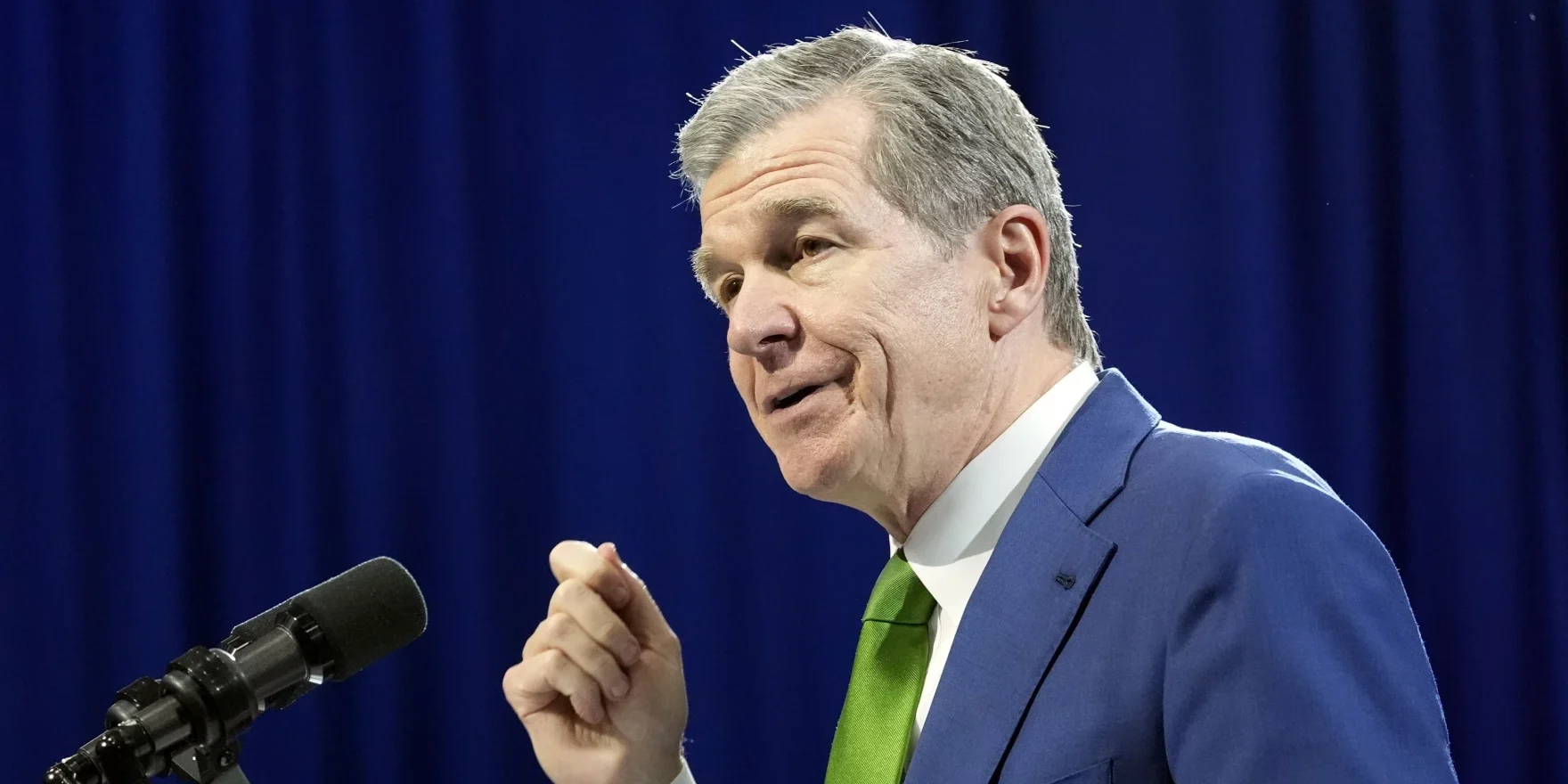
A Republican super PAC is pouring $17 million into North Carolina television and digital advertising to boost former Republican National Committee Chairman Michael Whatley, opening what is expected to be one of the country’s most expensive Senate races.
The Senate Leadership Fund campaign is the group’s largest ad reservation in any state so far this cycle and the first portion of its previously announced $71 million commitment to elect Whatley. The summer buy will run across broadcast television, cable and streaming, with direct mail and text messaging planned.
The opening 30-second spot targets former Democratic Gov. Roy Cooper’s criminal justice record. Senate Leadership Fund argues Cooper’s administration agreed to early release 3,500 inmates under a 2021 settlement over COVID-19 conditions in state prisons and says some later faced new violent-crime charges. The group launched the campaign under the theme “40 Years Is Enough,” a reference to Cooper’s career in state politics.
Cooper’s campaign called the attacks false, saying his administration fought the underlying lawsuit and that corrections and parole officials used criteria similar to federal pandemic release rules. A recent Assembly review found the settlement’s list included people who were not actually released early and that more than 90% of roughly 3,000 early-release inmates would have finished their sentences by the end of 2021 anyway.
The spending helps offset Cooper’s candidate-level financial advantage. WRAL reported Cooper raised $14.8 million in the second quarter, compared with $5 million for Whatley. Democrats are bringing outside money too: Senate Majority PAC has now committed about $42 million to support Cooper.
The race is for the seat of retiring Republican Sen. Thom Tillis and could help determine Senate control. The $17 million opening salvo confirms North Carolina will be saturated with national money and negative advertising through November.
NATIONAL
Roy Cooper Says Court Ruling Could Boost Whatley
Decision could turn party money into a central issue in North Carolina Senate race

Former North Carolina Gov. Roy Cooper is warning that a major Supreme Court campaign finance ruling could give Republican Michael Whatley a new path to close Democrats’ money advantage in one of the nation’s most closely watched Senate races.
Cooper said the decision could affect his race “more than others” and called it the “worst campaign finance decision since Citizens United,” The Hill reported. Cooper is running against Whatley, a former Republican National Committee chairman, for the open seat being vacated by Republican Sen. Thom Tillis.
The ruling in National Republican Senatorial Committee v. Federal Election Commission struck down federal limits on how much political parties may spend in coordination with candidates. Before the decision, national party committees faced state-based caps for Senate races. The court’s majority held the limits violated the First Amendment, while Justice Elena Kagan warned in dissent that the ruling could turn parties into an “alternative checking account” for campaigns.
The decision could matter quickly in North Carolina. WRAL reported Cooper’s campaign raised $13.8 million during the first quarter of 2026, compared with $5 million for Whatley. Including victory committees, Cooper had raised at least $36 million while Whatley had raised at least $16 million.
That candidate-level gap may now be easier for Republicans to offset. Reuters reported Democratic candidates had a $16 million cash advantage in North Carolina, but the Republican National Committee had a major national cash advantage over the Democratic National Committee as the new rules took effect.
The Associated Press reported Cooper and Whatley won their party nominations in March, setting up a fall race that could help determine control of the U.S. Senate. The ruling makes party money, not just candidate fundraising, a central issue in the final stretch.
BREAKING NEWS
NRSC Hits Democrat ‘Pro-Crime Agenda’ in Police Week Attack Ads
The NRSC rolled out new Police Week ads accusing Democrat Senate candidates of backing a “pro‑crime agenda,” intensifying partisan clashes over law enforcement and immigration enforcement.

FIRST ON THE DAILY SIGNAL—Amid Police Week, the National Republican Senatorial Committee is targeting Democrat Senate candidates with a series of ads accusing them of being anti-law enforcement.
The NRSC has produced eight new ads targeting Democrat Senate candidates in battleground states: former Gov. Roy Cooper of North Carolina, Graham Platner of Maine, Sen. Jon Ossoff of Georgia, former Rep. Mary Peltola of Alaska, Rep. Chris Pappas of New Hampshire, and former Ohio Sen. Sherrod Brown.
The campaign committee is also targeting three Democrat candidates in Michigan’s Senate primary: Rep. Haley Stevens, state Sen. Mallory McMorrow, and former health official Abdul El-Sayed.
Additionally, one of the ads takes aim at two Iowa Democrat candidates: state Sen. Zach Wahls and state Rep. Josh Turek.
“As Democrats prioritize dangerous illegal immigrants and threaten to abolish law enforcement agencies, Republicans are working to keep criminals behind bars and make communities safe again,” NRSC National Press Secretary Bernadette Breslin told The Daily Signal.
“Democrats’ soft-on-crime policies are too dangerous for American families,” Breslin added.
In one such ad, a narrator highlights the administration’s work on crime before criticizing Cooper on issues of law enforcement.
“Thanks to Republicans, violent crime is at all-time lows, and American communities are safer,” the narrator begins.
“But Roy Cooper wants to turn back the clock and bring back Joe Biden and Chuck Schumer’s pro-crime agenda that vilifies law enforcement, denies them crucial resources, and prioritizes dangerous illegal immigrants,” the narrator adds. “Americans can’t afford another Democrat crime wave. Reject Roy Cooper and stop the anti-police agenda.”
The ad features news clips highlighting recent drops in violent crime and Senate Democrats’ opposition to renewing Department of Homeland Security funding.
The ads come as Republicans in the Senate are moving to provide funding to immigration enforcement agencies through a party-line budget bill after a monthslong shutdown of DHS. Democrats objected to providing funding to immigration enforcement agencies during the record-setting shutdown.
The Daily Signal reached out for comment from the candidates mentioned in the ads.
“While Roy spent his career putting rapists and violent criminals behind bars and securing raises for law enforcement and public safety officials, Michael Whatley spent his appointing a convicted child sex predator who served time in prison for multiple counts of felony child sex crimes to a powerful position within the North Carolina Republican Party,” a Cooper campaign spokesperson replied, referring to the Republican candidate for Senate in North Carolina.
The spokesperson was speaking of Harvey L. West Jr., a convicted sex offender who held positions in the North Carolina Republican Party at the same time as Whatley was its chairman.
In response to the Cooper campaign, Whatley told The Daily Signal in a statement, “Nineteen innocent North Carolinians are dead because Roy Cooper chose to let violent criminals walk free—including the brutal murderer of Iryna Zarutska. He won’t answer to the families. He won’t explain the releases. He didn’t even follow the law to notify victims.”
Whatley added, “This was a deliberate, reckless choice that prioritized violent criminals ahead of innocent North Carolinians. Roy Cooper failed at his most basic duty as governor, protecting the people of North Carolina, and families paid the price.”
A Peltola spokesperson also responded to The Daily Signal, rejecting the ad’s premise.
“This ad from D.C. political operatives is a lie—Mary has always stood up to her own party to crack down on violent crime and secure the southern border, and that’s what she’ll continue to do when she gets to the U.S. Senate,” the spokesperson said in a statement.
The spokesperson added, “Mary also called out Joe Biden for his failures at the southern border, and she voted for tougher enforcement and billions in funding for Border Patrol. In the Senate, Mary will work with anyone, including President [Donald] Trump, to bring down crime, secure the border, and keep Alaska safe.”
The post Senate Democrat Candidates Hit With ‘Pro-Crime’ Attack Ads first appeared on The Daily Signal.

GOP Super PAC Launches $17 Million Blitz Against Cooper

Charlotte Officer Accused Of Leaking Undercover Plate Data

Key Absences Help Republicans Override Four Stein Vetoes
Five Democrats Could Help Override Stein’s Camping Veto

Republicans Hit Roy Cooper Over Insurance Industry Donations

Audit Flags Missing Data Behind $111 Million Helene Camps

System Failing Iryna Zarutska: Charlotte Light Rail Murder Suspect Dodges Trial On Mental Health Grounds As Family Waits For Justice

NC Budget Bust: Lawmakers Flee Raleigh as State Remains Only in Nation Without Spending Plan

New Poll Shows NC Republican Base Will Walk Away From 2026 Senate Race If SAVE America Act Dies In The Senate

Gov. Stein Demands Pay Raises While Doing Nothing To Break The Two-Year Legislative Stalemate He Helped Create

Raleigh’s Comedy Scene Explodes as Three New Venues Open in the Triangle

Secretary Mullin Visits Chimney Rock, Announces Millions In New Flood Relief For Hurricane Helene Victims
-
 BREAKING NEWS4 months ago
System Failing Iryna Zarutska: Charlotte Light Rail Murder Suspect Dodges Trial On Mental Health Grounds As Family Waits For Justice
-
 BREAKING NEWS4 months ago
NC Budget Bust: Lawmakers Flee Raleigh as State Remains Only in Nation Without Spending Plan
-
 BREAKING NEWS4 months ago
New Poll Shows NC Republican Base Will Walk Away From 2026 Senate Race If SAVE America Act Dies In The Senate
-
 BREAKING NEWS4 months ago
Gov. Stein Demands Pay Raises While Doing Nothing To Break The Two-Year Legislative Stalemate He Helped Create
-
 LOCAL5 months ago
Raleigh’s Comedy Scene Explodes as Three New Venues Open in the Triangle
-
 BREAKING NEWS4 months ago
Secretary Mullin Visits Chimney Rock, Announces Millions In New Flood Relief For Hurricane Helene Victims
-

 BREAKING NEWS4 months ago
Port of Wilmington Sets New Cargo Volume Record Amid East Coast Shipping Surge
-

 BREAKING NEWS4 months ago
NC Legislature Passes Historic Education Funding Bill Targeting Rural Schools