News
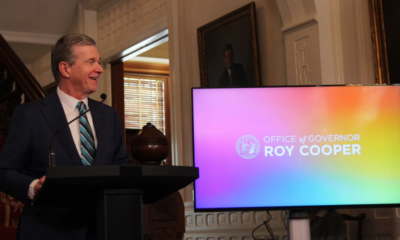
Republicans Hit Roy Cooper Over Insurance Industry Donations
Republican attack tests Cooper’s anti-insurer message against his donor record


Republicans are accusing former North Carolina Gov. Roy Cooper of hypocrisy after his U.S. Senate campaign promised to crack down on health insurers, pointing to donations tied to the same industry he now says he will confront.
The National Republican Senatorial Committee said in a July 21 attack that Cooper has accepted at least $400,000 from insurance interests during nearly four decades in politics. The committee says the figure combines contributions to his current federal campaign with older state-level donations from insurer political action committees and employees. It did not publish a complete itemized calculation. It included no Cooper response.
The attack followed Cooper’s “Take Them On” television ad, which says insurers have “gotten away with far too much for far too long.” The ad promises to limit unexpected medical bills and denials of doctor-recommended care.
Federal Election Commission records show Cooper’s Senate committee raised nearly $35 million through June 30, including $8.37 million in itemized individual contributions.
The NRSC linked Cooper to rising medical costs, rural hospital closures and Medicaid spending. North Carolina’s 2023 Medicaid expansion law uses hospital assessments and increased premium-tax revenue to finance the nonfederal share; the federal government generally pays 90% of expansion costs.
The committee further criticized Cooper for opposing the broader federal law that created North Carolina’s $213 million Rural Health Transformation Program. State health officials welcomed the award but said the same law is projected to reduce federal Medicaid support to North Carolina by nearly $50 billion over 10 years.
The exchange puts health care costs and donor influence at the center of Cooper’s contest with Republican Michael Whatley for the Senate seat being vacated by Sen. Thom Tillis.








BREAKING NEWS
GOP Super PAC Launches $17 Million Blitz Against Cooper
Republican money floods into North Carolina as crime becomes the campaign’s opening battleground
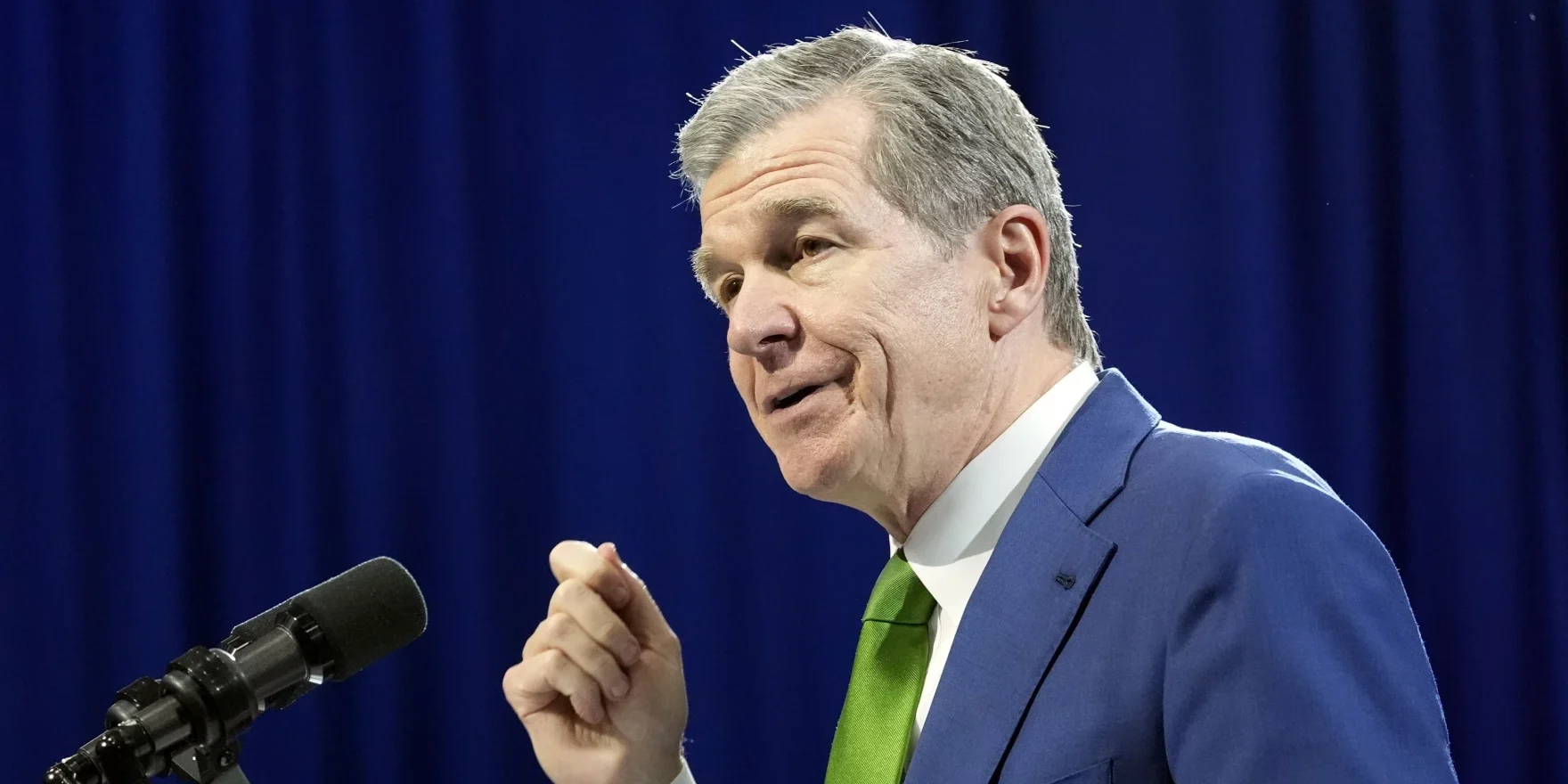
A Republican super PAC is pouring $17 million into North Carolina television and digital advertising to boost former Republican National Committee Chairman Michael Whatley, opening what is expected to be one of the country’s most expensive Senate races.
The Senate Leadership Fund campaign is the group’s largest ad reservation in any state so far this cycle and the first portion of its previously announced $71 million commitment to elect Whatley. The summer buy will run across broadcast television, cable and streaming, with direct mail and text messaging planned.
The opening 30-second spot targets former Democratic Gov. Roy Cooper’s criminal justice record. Senate Leadership Fund argues Cooper’s administration agreed to early release 3,500 inmates under a 2021 settlement over COVID-19 conditions in state prisons and says some later faced new violent-crime charges. The group launched the campaign under the theme “40 Years Is Enough,” a reference to Cooper’s career in state politics.
Cooper’s campaign called the attacks false, saying his administration fought the underlying lawsuit and that corrections and parole officials used criteria similar to federal pandemic release rules. A recent Assembly review found the settlement’s list included people who were not actually released early and that more than 90% of roughly 3,000 early-release inmates would have finished their sentences by the end of 2021 anyway.
The spending helps offset Cooper’s candidate-level financial advantage. WRAL reported Cooper raised $14.8 million in the second quarter, compared with $5 million for Whatley. Democrats are bringing outside money too: Senate Majority PAC has now committed about $42 million to support Cooper.
The race is for the seat of retiring Republican Sen. Thom Tillis and could help determine Senate control. The $17 million opening salvo confirms North Carolina will be saturated with national money and negative advertising through November.
LOCAL
Charlotte Officer Accused Of Leaking Undercover Plate Data
Officer’s arrest turns North Carolina’s surveillance debate into an alleged insider-abuse case

A Charlotte-Mecklenburg police officer is accused of using police systems to identify an undercover vehicle and passing the information to the target of a Watauga County drug investigation.
The North Carolina State Bureau of Investigation arrested Officer Seth Daniel Elliott July 29 and charged him with illegally accessing a government computer. Elliott remains on unpaid leave. The charge remains an allegation.
A court affidavit obtained by WSOC-TV says a drug investigation target contacted Elliott June 16 after becoming suspicious of a buyer. The vehicle belonged to an undercover officer in the Watauga County investigation. Elliott allegedly searched the plate through Flock Safety and Criminal Justice Law Enforcement Automated Data Services (CJLEADS), then relayed the information to the target.
The Charlotte-Mecklenburg Police Department (CMPD) said state investigators alerted the agency June 18 during an unrelated case. Elliott was removed from duties June 22, and his access to criminal-intelligence systems was revoked. Internal Affairs is investigating.
CMPD does not own Flock cameras, but an agreement lets officers search devices operated by other agencies at no charge. CJLEADS centralizes offender information for criminal-justice professionals, while Flock readers create searchable vehicle-location records. State policy limits CJLEADS access to official duties and warns misuse can trigger termination and civil or criminal liability.
Police Chief Estella Patterson called misuse of confidential technology a betrayal of public trust and promised accountability.
The arrest comes as North Carolina expands automated license plate surveillance. The new state budget made a highway-camera pilot permanent and opened it to agencies statewide. Supporters say the technology helps locate suspects, stolen vehicles and missing people, while privacy advocates have warned that broad access creates opportunities for insider abuse.
News
Key Absences Help Republicans Override Four Stein Vetoes
A razor-thin House margin turns attendance into legislative power
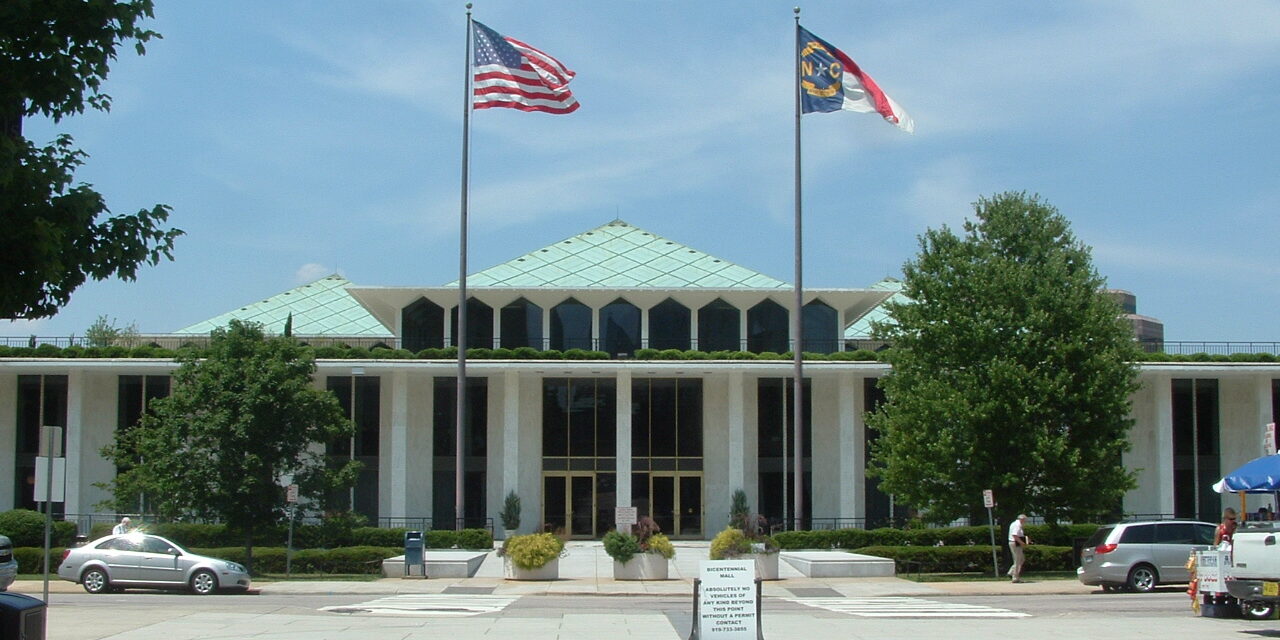
Two absences in the North Carolina House gave Republicans the opening they needed to override four of Gov. Josh Stein’s vetoes, advancing restrictions on diversity programs and expanded cooperation with federal immigration authorities.
Republican leaders called the votes June 24 after unaffiliated Rep. Carla Cunningham and Democratic Rep. Shelly Willingham were absent from the afternoon session, Axios reported. Republican Rep. Dan Kiger had recently been seated to replace former Rep. Sarah Stevens, bringing the Republican caucus back to 71 members.
Each override passed 71-47, barely clearing the three-fifths threshold because only 118 votes were cast. With all 120 House seats participating, Republicans would have needed 72 votes and support from outside their caucus.
Three measures immediately became law because the Senate had already overridden Stein’s vetoes. The North Carolina Border Protection Act requires several state law enforcement agencies to enter formal 287(g) agreements with U.S. Immigration and Customs Enforcement and strengthens restrictions on sanctuary policies.
Senate Bill 227 limits diversity, equity and inclusion programs in K-12 public schools and bars promotion of specified “divisive concepts.” Senate Bill 558 imposes similar restrictions on public universities and community colleges, including limits on required diversity training and coursework.
The House overrode Stein’s veto of House Bill 171, which would prohibit diversity initiatives in state agencies and restrict public money for related offices, positions and training. That measure still needs a Senate override before becoming law.
House Speaker Destin Hall defended the votes, saying the bills had already received extensive debate. Stein accused lawmakers of “stoking the culture wars” while delaying teacher and law enforcement raises and a state budget.
The episode underscored the fragile balance in Raleigh. Republicans remain one seat short of an automatic veto-proof House majority, but attendance alone can determine whether Stein’s objections survive.

GOP Super PAC Launches $17 Million Blitz Against Cooper

Charlotte Officer Accused Of Leaking Undercover Plate Data

Key Absences Help Republicans Override Four Stein Vetoes
Five Democrats Could Help Override Stein’s Camping Veto

Republicans Hit Roy Cooper Over Insurance Industry Donations

Audit Flags Missing Data Behind $111 Million Helene Camps

System Failing Iryna Zarutska: Charlotte Light Rail Murder Suspect Dodges Trial On Mental Health Grounds As Family Waits For Justice

NC Budget Bust: Lawmakers Flee Raleigh as State Remains Only in Nation Without Spending Plan

New Poll Shows NC Republican Base Will Walk Away From 2026 Senate Race If SAVE America Act Dies In The Senate

Gov. Stein Demands Pay Raises While Doing Nothing To Break The Two-Year Legislative Stalemate He Helped Create

Raleigh’s Comedy Scene Explodes as Three New Venues Open in the Triangle

Secretary Mullin Visits Chimney Rock, Announces Millions In New Flood Relief For Hurricane Helene Victims
-
 BREAKING NEWS4 months ago
System Failing Iryna Zarutska: Charlotte Light Rail Murder Suspect Dodges Trial On Mental Health Grounds As Family Waits For Justice
-
 BREAKING NEWS4 months ago
NC Budget Bust: Lawmakers Flee Raleigh as State Remains Only in Nation Without Spending Plan
-
 BREAKING NEWS4 months ago
New Poll Shows NC Republican Base Will Walk Away From 2026 Senate Race If SAVE America Act Dies In The Senate
-
 LOCAL5 months ago
Raleigh’s Comedy Scene Explodes as Three New Venues Open in the Triangle
-
 BREAKING NEWS4 months ago
Gov. Stein Demands Pay Raises While Doing Nothing To Break The Two-Year Legislative Stalemate He Helped Create
-
 BREAKING NEWS4 months ago
Secretary Mullin Visits Chimney Rock, Announces Millions In New Flood Relief For Hurricane Helene Victims
-

 BREAKING NEWS4 months ago
Port of Wilmington Sets New Cargo Volume Record Amid East Coast Shipping Surge
-
 BREAKING NEWS4 months ago
NC Legislature Passes Historic Education Funding Bill Targeting Rural Schools