POLITICS
Housing and Child Care Top the Agenda as NH Lawmakers Gear Up for 2026 Session
As the 2026 legislative session approaches, housing affordability and child care availability have emerged as the top priorities for lawmakers and Governor Ayotte on both sides of the aisle.


CONCORD, N.H. — As the calendar turns to a new legislative year in New Hampshire, a rare show of bipartisan agreement is emerging at the State House: housing and child care are the issues that matter most to Granite State families, and 2026 is the year to act.
Governor Kelly Ayotte, Republican legislative leaders, and their Democratic counterparts have all pointed to housing affordability and child care availability as top priorities heading into the session — a convergence that reflects the scale of the challenge facing working families across the state.
A State Under Real Pressure
New Hampshire’s housing market has been among the most strained in New England for several years running. Limited inventory, persistently high mortgage rates, and an influx of buyers from neighboring states — particularly Massachusetts — have pushed home prices to levels that leave many residents priced out of the communities where they work. Teachers, nurses, firefighters, and other essential workers are increasingly unable to afford homes in the towns they serve.
The median sale price for a single-family home in New Hampshire has climbed well above $500,000 in recent years, a figure that was once unthinkable in a state long known for its relative affordability compared to its southern neighbor.
Child care compounds the pressure on families. Many parents in New Hampshire report spending as much on child care as they do on rent or mortgage payments. The shortage of licensed providers — driven partly by low wages for child care workers — has forced some parents out of the workforce entirely, creating a cycle of economic strain that touches both families and employers.
What Ayotte Has Said
“I think there is a lot more work to be done with respect to housing, and I also believe the same could be said with respect to childcare,” Ayotte told reporters in recent weeks. The governor has signaled interest in business-focused solutions to the child care gap — potentially including tax credits for employers who invest in child care for their workers — while pointing to housing laws passed during her first year as a foundation to build on.
Critics argue that the governor’s approach has not moved the needle quickly enough. Democratic leaders point to the gap between the scale of the crisis and the modesty of the remedies proposed so far.
A Packed Legislative Calendar
Beyond housing and child care, the 2026 session will feature debates on an unusually wide range of consequential issues: death penalty restoration, marijuana legalization through a constitutional amendment, gender-affirming care restrictions, K-12 curriculum legislation, and local spending caps. With more than 1,300 bills filed, lawmakers will have a full plate from the first gavel to the last vote of the session.
Pine & Cardinal will track the key debates closely throughout 2026 and report on what these changes mean for families, businesses, and communities across New Hampshire.



BREAKING NEWS
GOP Super PAC Launches $17 Million Blitz Against Cooper
Republican money floods into North Carolina as crime becomes the campaign’s opening battleground


A Republican super PAC is pouring $17 million into North Carolina television and digital advertising to boost former Republican National Committee Chairman Michael Whatley, opening what is expected to be one of the country’s most expensive Senate races.
The Senate Leadership Fund campaign is the group’s largest ad reservation in any state so far this cycle and the first portion of its previously announced $71 million commitment to elect Whatley. The summer buy will run across broadcast television, cable and streaming, with direct mail and text messaging planned.
The opening 30-second spot targets former Democratic Gov. Roy Cooper’s criminal justice record. Senate Leadership Fund argues Cooper’s administration agreed to early release 3,500 inmates under a 2021 settlement over COVID-19 conditions in state prisons and says some later faced new violent-crime charges. The group launched the campaign under the theme “40 Years Is Enough,” a reference to Cooper’s career in state politics.
Cooper’s campaign called the attacks false, saying his administration fought the underlying lawsuit and that corrections and parole officials used criteria similar to federal pandemic release rules. A recent Assembly review found the settlement’s list included people who were not actually released early and that more than 90% of roughly 3,000 early-release inmates would have finished their sentences by the end of 2021 anyway.
The spending helps offset Cooper’s candidate-level financial advantage. WRAL reported Cooper raised $14.8 million in the second quarter, compared with $5 million for Whatley. Democrats are bringing outside money too: Senate Majority PAC has now committed about $42 million to support Cooper.
The race is for the seat of retiring Republican Sen. Thom Tillis and could help determine Senate control. The $17 million opening salvo confirms North Carolina will be saturated with national money and negative advertising through November.
News
Key Absences Help Republicans Override Four Stein Vetoes
A razor-thin House margin turns attendance into legislative power
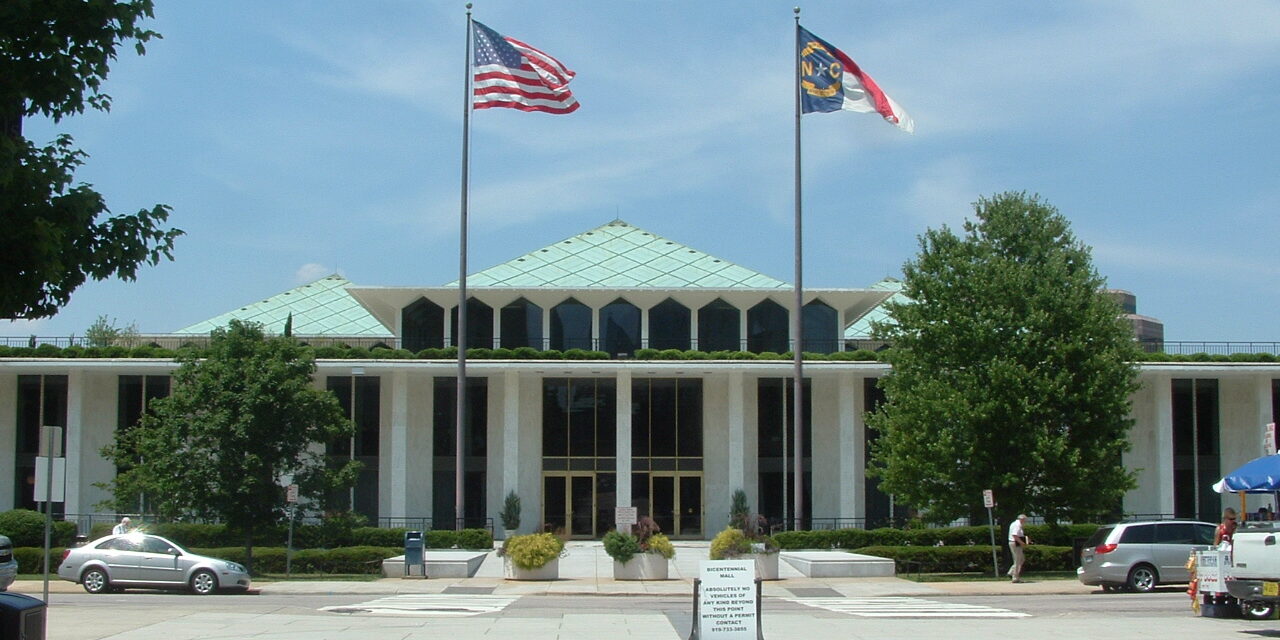
Two absences in the North Carolina House gave Republicans the opening they needed to override four of Gov. Josh Stein’s vetoes, advancing restrictions on diversity programs and expanded cooperation with federal immigration authorities.
Republican leaders called the votes June 24 after unaffiliated Rep. Carla Cunningham and Democratic Rep. Shelly Willingham were absent from the afternoon session, Axios reported. Republican Rep. Dan Kiger had recently been seated to replace former Rep. Sarah Stevens, bringing the Republican caucus back to 71 members.
Each override passed 71-47, barely clearing the three-fifths threshold because only 118 votes were cast. With all 120 House seats participating, Republicans would have needed 72 votes and support from outside their caucus.
Three measures immediately became law because the Senate had already overridden Stein’s vetoes. The North Carolina Border Protection Act requires several state law enforcement agencies to enter formal 287(g) agreements with U.S. Immigration and Customs Enforcement and strengthens restrictions on sanctuary policies.
Senate Bill 227 limits diversity, equity and inclusion programs in K-12 public schools and bars promotion of specified “divisive concepts.” Senate Bill 558 imposes similar restrictions on public universities and community colleges, including limits on required diversity training and coursework.
The House overrode Stein’s veto of House Bill 171, which would prohibit diversity initiatives in state agencies and restrict public money for related offices, positions and training. That measure still needs a Senate override before becoming law.
House Speaker Destin Hall defended the votes, saying the bills had already received extensive debate. Stein accused lawmakers of “stoking the culture wars” while delaying teacher and law enforcement raises and a state budget.
The episode underscored the fragile balance in Raleigh. Republicans remain one seat short of an automatic veto-proof House majority, but attendance alone can determine whether Stein’s objections survive.
News
Five Democrats Could Help Override Stein’s Camping Veto
Bipartisan support sets up a new test of the governor’s veto power
Five North Carolina House Democrats could help Republicans override Gov. Josh Stein’s veto of a statewide public camping ban when lawmakers return to Raleigh Aug. 4.
The House placed House Bill 437 on its Aug. 4 calendar July 27, formally setting up a possible override vote. The measure would bar local governments from allowing regular sleeping or camping on most public property, create drug-free zones around homeless service facilities and let residents or businesses sue governments accused of failing to enforce the restrictions.
The political fight is unusual because the final version already attracted support from five sitting Democrats. Democratic Reps. Bryan Cohn, Abe Jones, Garland Pierce, Dante Pittman and Shelly Willingham joined Republicans in the June 30 House concurrence vote, which passed 73-40. Willingham is listed as a bill sponsor. Unaffiliated Reps. Carla Cunningham and Nasif Majeed, both former Democrats, voted yes as well.
Republicans hold 71 of the House’s 120 seats, leaving them one vote short of the 72 needed if every member participates. The seven non-Republican supporters therefore give Republican leaders several paths to override the veto, although none is required to repeat an earlier vote during the override.
Stein vetoed the bill July 8, calling it poorly constructed and a significant unfunded mandate for local governments. He argued it would make homelessness and addiction harder to address. Republican supporters say the restrictions would improve public safety, curb drug activity near shelters and protect access to possible federal funding.
The pending vote offers a current test of Democratic unity after several crossover lawmakers helped Republicans override Stein in 2025. The question is no longer what Democrats did last year, but whether any sitting members will again break with their Governor when the veto returns to the House calendar Aug. 4.

GOP Super PAC Launches $17 Million Blitz Against Cooper

Charlotte Officer Accused Of Leaking Undercover Plate Data

Key Absences Help Republicans Override Four Stein Vetoes
Five Democrats Could Help Override Stein’s Camping Veto

Republicans Hit Roy Cooper Over Insurance Industry Donations

Audit Flags Missing Data Behind $111 Million Helene Camps

System Failing Iryna Zarutska: Charlotte Light Rail Murder Suspect Dodges Trial On Mental Health Grounds As Family Waits For Justice

NC Budget Bust: Lawmakers Flee Raleigh as State Remains Only in Nation Without Spending Plan

New Poll Shows NC Republican Base Will Walk Away From 2026 Senate Race If SAVE America Act Dies In The Senate

Gov. Stein Demands Pay Raises While Doing Nothing To Break The Two-Year Legislative Stalemate He Helped Create

Raleigh’s Comedy Scene Explodes as Three New Venues Open in the Triangle

Secretary Mullin Visits Chimney Rock, Announces Millions In New Flood Relief For Hurricane Helene Victims
-
 BREAKING NEWS4 months ago
System Failing Iryna Zarutska: Charlotte Light Rail Murder Suspect Dodges Trial On Mental Health Grounds As Family Waits For Justice
-
 BREAKING NEWS4 months ago
NC Budget Bust: Lawmakers Flee Raleigh as State Remains Only in Nation Without Spending Plan
-
 BREAKING NEWS4 months ago
New Poll Shows NC Republican Base Will Walk Away From 2026 Senate Race If SAVE America Act Dies In The Senate
-
 LOCAL5 months ago
Raleigh’s Comedy Scene Explodes as Three New Venues Open in the Triangle
-
 BREAKING NEWS4 months ago
Gov. Stein Demands Pay Raises While Doing Nothing To Break The Two-Year Legislative Stalemate He Helped Create
-
 BREAKING NEWS4 months ago
Secretary Mullin Visits Chimney Rock, Announces Millions In New Flood Relief For Hurricane Helene Victims
-

 BREAKING NEWS4 months ago
Port of Wilmington Sets New Cargo Volume Record Amid East Coast Shipping Surge
-

 BREAKING NEWS4 months ago
NC Legislature Passes Historic Education Funding Bill Targeting Rural Schools