
LOCAL
Raleigh Killing Renews Scrutiny Of Courts And Mental Health
Months after Zoe Welsh’s death, Wake County officials are still looking for answers


The killing of Raleigh teacher Zoe Welsh is still driving hard questions about whether Wake County courts are better equipped to stop repeat offenders with serious mental-health problems before another tragedy.
WRAL reported that Ryan Camacho, 36, is charged with breaking into Welsh’s Clay Street home and murdering her Jan. 3 after prior cases involving alleged break-ins and mental-health concerns. The charges remain allegations, and Camacho is presumed innocent unless proven guilty.
The Raleigh Police Department said officers responded at 6:33 a.m. to a burglary at 819 Clay Street after Welsh called 911 to report a man inside her home. Police said the suspect assaulted Welsh while she was still on the phone, and Camacho was arrested nearby on murder and felony burglary charges.
WRAL’s follow-up found some changes are underway. Iryna’s Law, passed after the Charlotte light rail killing of Iryna Zarutska, allows judges to consider a defendant’s broader criminal history and makes pretrial release harder in violent-offense cases. The North Carolina General Assembly lists House Bill 307 as Session Law 2025-93.
Wake County’s next change may come at the courthouse. Incoming District Attorney Wiley Nickel has said Wake needs a mental health court, more prosecutors and faster case processing. WRAL reported Nickel requested $603,000 to help fund five assistant district attorneys and six legal assistants.
Raleigh’s ACORNS unit remains the city’s front-line alternative-response model. The city says ACORNS pairs officers and social workers to help residents facing homelessness, substance abuse, mental-health crises and family instability, using a “care and safety first, enforcement last” approach.
Welsh’s death exposed a gap no single program can close. Raleigh now has a tougher state pretrial law, a promised mental-health court push and crisis outreach, but the real test is whether officials identify dangerous defendants before another emergency call comes too late.
LOCAL
Wilson Motel Hit With Court Order After Years Of Crime Complaints
State officials say the property generated more than 45 nuisance-related calls since 2022

A Wilson motel accused of draining police resources with years of crime complaints is now under a court order as state and local officials try to shut down alleged nuisance activity at the property.
The North Carolina Department of Public Safety said the Wilson Police Department and City of Wilson asked the North Carolina Alcohol Law Enforcement Division for help in March with a civil nuisance abatement case against America’s Best Value Inn at 1815 U.S. 301 South. A formal investigation opened immediately.
Investigators said the property had a history of illegal drug sales, drug-related overdoses, assaults, homicides, child abuse and prostitution. The motel generated more than 45 nuisance-related calls for service since May 2022, according to state officials.
Superior Court Judge Bill Wolfe signed a temporary restraining order against the motel’s owners and operators after the joint investigation by Alcohol Law Enforcement and the city. The order bars the sale of the property, requires nuisance-related criminal activity to stop and prevents new tenants from occupying the premises while the case continues.
Local outlet WCTI reported the restraining order remains in effect pending further court proceedings. The case shows how officials can use civil tools against properties tied to repeated crime complaints, rather than relying only on arrests.
North Carolina’s nuisance law allows the attorney general, a district attorney, county, municipality or private county resident to bring an action to abate a nuisance. Chapter 19 defines nuisance activity to include places used for prostitution, illegal controlled substances, illegal alcohol sales or repeated acts creating a breach of the peace.
State officials said Alcohol Law Enforcement’s Nuisance Abatement Team specializes in investigating crime-plagued properties and recommending civil enforcement actions.
LOCAL
Winston-Salem Eyes Youth Curfew After Teen Takeover
City leaders weigh a 10 p.m. crackdown as residents split over public safety and youth freedom

Winston-Salem leaders are weighing a citywide youth curfew after a downtown “teen takeover” revived concerns about late-night gatherings, juvenile crime and whether parents are doing enough to keep teens safe.
The proposed Youth Protection Safety Ordinance would apply to anyone 17 or younger in public places and businesses from 10 p.m. to 6 a.m. WFMY News 2 reported residents are divided, though many support action after videos of a large group of teenagers downtown circulated last week.
City documents say the ordinance is meant to protect minors and curb late-night crime and disorder. A Winston-Salem Police Department agenda summary cites “ongoing concerns” involving juvenile victimization, disorderly conduct and criminal activity during overnight hours.
The proposal includes exceptions for work, school events, religious events, emergencies, First Amendment activity and minors accompanied by a parent, guardian or authorized adult. Violations could send juveniles to juvenile court, while adults who knowingly help minors break the curfew could face misdemeanor charges, according to city materials.
The debate follows recent downtown incidents involving young people. WFDD reported police cited 11 juveniles after a Wednesday incident, mostly for underage drinking, while several young adults were arrested on drug possession and disorderly conduct allegations. One person was charged with carrying a concealed weapon.
Police Chief William Penn Jr. said officers intercepted another planned gathering at Winston Lake, where he saw parents dropping children off around 10 p.m., ABC45 reported.
Supporters argue a temporary curfew would give police a prevention tool before summer crowds grow more dangerous. Critics warn a broad rule could punish teens who are downtown legally or shift problems elsewhere. The full City Council is scheduled to consider the measure June 15.
LOCAL
Lake Lure Bridge Delay Pushes Dam Project To 2030
Hurricane Helene turned the dam into a public-safety flashpoint, but construction is now years away
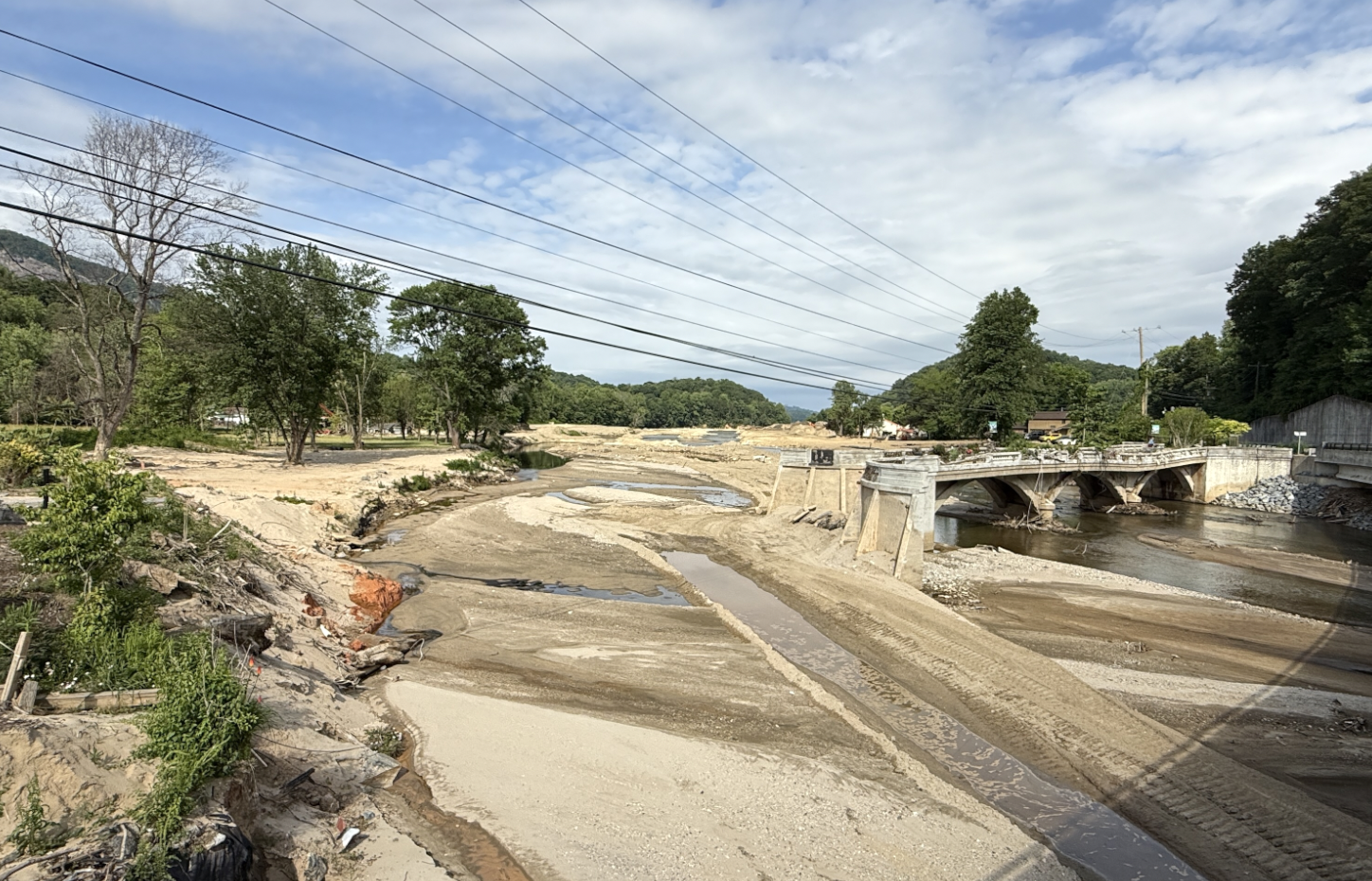
Lake Lure residents face a longer wait for a bridge replacement tied to one of western North Carolina’s most scrutinized infrastructure sites after Hurricane Helene turned the dam into a statewide public-safety flashpoint.
The North Carolina Board of Transportation approved revisions to the State Transportation Improvement Program June 4 delaying the Lake Lure Dam bridge project. The project covers SR 1306, known as Bills Creek Road, and Bridge 800628 over Lake Lure Dam and the Broad River. Right-of-way work now moves from fiscal 2027 to fiscal 2029, construction moves from fiscal 2028 to fiscal 2030 and the estimated cost is $37.41 million.
State officials said the delay allows more time for planning and design, a dry explanation for a project connected to a dam that triggered emergency evacuations during Helene. The town’s Hurricane Helene summary says Lake Lure’s emergency action plan was elevated Sept. 27, 2024, after floodwater rose over sections of the dam and bridge.
The dam ultimately held. Schnabel Engineering describes Lake Lure Dam as a 120-foot-tall concrete multiple-arch buttress structure and a nearly 100-year-old high-hazard dam. Recent work has included inspections, stability analyses, reservoir-drain design and support.
The bridge delay is separate from the town’s broader push to replace the dam itself. Lake Lure said in May it had grant funding for 30% design work and Federal Emergency Management Agency approval for a $3.5 million detailed-design phase, with the town responsible for a $1.225 million match.
The North Carolina Department of Transportation (NCDOT) said the storm damaged more than 9,400 state-maintained road locations, including nearly 850 bridges and more than 1,850 pipes and culverts.
For residents and businesses near Lake Lure, the revised schedule means the bridge replacement remains funded but is not expected to start construction until fiscal 2030.

Roy Cooper’s Solar Ties Resurface In Senate Race

Wilson Motel Hit With Court Order After Years Of Crime Complaints

Raleigh Killing Renews Scrutiny Of Courts And Mental Health

NC Sends First-In-Nation Lawsuit Investment Ban To Stein

Batch Defends Profanity-Laced Budget Video As GOP Demands Discipline

NC Election Board Weighs Photo ID Rule Changes

NC Budget Bust: Lawmakers Flee Raleigh as State Remains Only in Nation Without Spending Plan

New Poll Shows NC Republican Base Will Walk Away From 2026 Senate Race If SAVE America Act Dies In The Senate

System Failing Iryna Zarutska: Charlotte Light Rail Murder Suspect Dodges Trial On Mental Health Grounds As Family Waits For Justice

Port of Wilmington Sets New Cargo Volume Record Amid East Coast Shipping Surge

NC Legislature Passes Historic Education Funding Bill Targeting Rural Schools

Research Triangle Startups Raise Record $2.1 Billion in First Quarter
-
 BREAKING NEWS3 months ago
NC Budget Bust: Lawmakers Flee Raleigh as State Remains Only in Nation Without Spending Plan
-
 BREAKING NEWS2 months ago
New Poll Shows NC Republican Base Will Walk Away From 2026 Senate Race If SAVE America Act Dies In The Senate
-
 BREAKING NEWS2 months ago
System Failing Iryna Zarutska: Charlotte Light Rail Murder Suspect Dodges Trial On Mental Health Grounds As Family Waits For Justice
-
 BREAKING NEWS3 months ago
Port of Wilmington Sets New Cargo Volume Record Amid East Coast Shipping Surge
-
 BREAKING NEWS3 months ago
NC Legislature Passes Historic Education Funding Bill Targeting Rural Schools
-
 LOCAL3 months ago
Research Triangle Startups Raise Record $2.1 Billion in First Quarter
-

 LOCAL3 months ago
Raleigh’s Comedy Scene Explodes as Three New Venues Open in the Triangle
-

 BREAKING NEWS2 months ago
Gov. Stein Demands Pay Raises While Doing Nothing To Break The Two-Year Legislative Stalemate He Helped Create